Why does my house still smell like smoke weeks after a fire
Smoke odor that lingers weeks after a fire means particles are trapped in walls, vents, and insulation. Here's why it happens in Newbury Park and how to remove it.
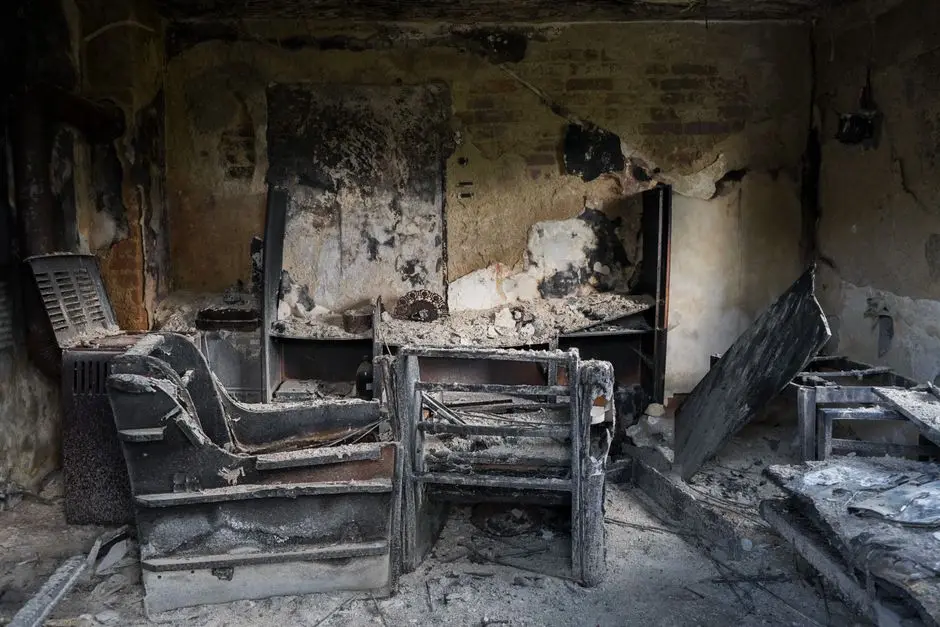
Your house still smells like smoke weeks after a fire because smoke particles have soaked into porous materials-drywall paper, insulation, wood framing, carpet padding, and ductwork-and those particles keep off-gassing into the air. Airing out the rooms won't fix it. Until the source materials are cleaned, sealed, or removed, the odor will return every time humidity rises or the HVAC system runs. This post explains exactly where those particles hide in a Newbury Park home, why some cleaning methods make the problem worse, and what professional smoke odor removal actually involves.
The short answer: smoke odor is a particle problem, not an air problem
Smoke odor after a fire is a particle and residue problem that requires physical removal or neutralization of the source, not just ventilation. When wood, drywall, and synthetic furniture burn, they release microscopic soot particles and volatile organic compounds (VOCs) that settle on every surface and penetrate anything porous. Those VOCs continue to evaporate for months. That's why the smell seems to come back in waves-it's tied to temperature and humidity, not to how long you've had the windows open.
In a typical Newbury Park home, the visible char might be confined to one room, but the smoke travels. It moves through door gaps, attic penetrations, and the return-air plenum within minutes. By the time the fire department leaves, odor-causing residue is often in rooms that never saw flame.
Why smoke smell persists after a fire in Newbury Park
Smoke smell persists after a fire in Newbury Park because the region's building stock and climate both work against quick odor dissipation. Most homes here were built between the 1960s and early 2000s, and many have original drywall, older insulation, and HVAC systems that recirculate air through the same ducts for decades. Smoke residue that reaches those systems doesn't leave on its own.
There's also a seasonal factor. Newbury Park sits in a semi-arid climate with hot, dry summers and cool, damp winters. During the wet months, humidity pulls VOCs out of drywall and wood, which is why many homeowners notice the smoke smell getting stronger in December and January even though the fire happened in September. A home that seemed fine in October can smell like a campfire by the holidays.
Three other factors drive lingering odor:
- Protein smoke from kitchen fires leaves an invisible film that smells worse after cleaning because the residue smears into a larger surface area.
- Wet smoke from smoldering, oxygen-starved fires (common in electrical and attic fires) produces a pungent, sticky residue that bonds to surfaces.
- Synthetic materials in modern furniture, carpet, and insulation release stronger, more persistent odors than natural materials did in older homes.
If you've already had a restoration company out and the smell came back, the most likely cause is that the source wasn't fully removed-often in the HVAC system or behind baseboards. Our Smoke Damage Restoration in NEWBURY PARK, California team sees this constantly on second-opinion calls.
Where smoke odor hides in a Newbury Park home
Smoke odor hides in the porous materials and dead-air spaces of a Newbury Park home, and those are the exact places most DIY cleaning never reaches. If you've wiped down every visible surface and the smell is still there, the source is almost certainly in one of these spots.
Smoke smell in walls and vents
Drywall paper is essentially a sponge. Smoke particles lodge in the paper facing and in the joint compound, and no amount of surface wiping pulls them out. Paint can trap them temporarily, but the odor returns as the paint cures and off-gasses. Vents are worse: the ductwork in most Newbury Park homes runs through unconditioned attic space, and smoke that entered the return-air system will keep circulating through every room until the ducts are professionally cleaned and sealed.
Smoke odor in HVAC after fire
The HVAC system is the single most overlooked source of lingering smoke odor after a fire. The blower motor, evaporator coil, and fiberglass duct liner all collect soot. Every time the system kicks on, it pushes that odor back into the living space. If your smoke smell is worse when the heat or AC runs, the HVAC is the problem.
Smoke smell in drywall after fire
Drywall in kitchens and garages often absorbs enough smoke that cleaning isn't enough. In those cases the affected drywall has to be cut out and replaced-typically the bottom 12 to 24 inches of the wall cavity, where residue concentrates. This is also where we find hidden charring that the original inspection missed.
Attics are another hot spot. Attic fires in Newbury Park often smolder in insulation for a long time before they're detected, and the smoke coats the entire roof deck. Our Attic Fire Restoration in NEWBURY PARK, California crews treat the decking, rafters, and insulation separately because each material holds odor differently.
How to get rid of smoke smell in house after fire in Newbury Park
Getting rid of smoke smell in a house after a fire in Newbury Park requires removing the residue at the source, sealing what can't be removed, and then treating the air-in that order. Skipping steps or doing them out of order is why so many DIY attempts fail.
- Remove the source. Pull out charred debris, saturated insulation, and any porous material that can't be cleaned. This includes carpet, pad, and sometimes furniture.
- Clean every surface with the right agent. Protein residue needs an alkaline cleaner; soot from wood fires needs a dry sponge first, then a chemical sponge. Using the wrong product smears the residue and makes it worse.
- Clean and seal the HVAC system. Ducts, blower, and coil get cleaned, and any fiberglass liner that's contaminated gets replaced. This alone resolves a large share of lingering odor complaints.
- Seal porous structural materials. After cleaning, exposed framing and drywall get a shellac-based or specialized odor-sealing primer. This locks in residual VOCs.
- Treat the air. Hydroxyl generators or ozone (in unoccupied spaces only) break down remaining airborne odor molecules. This is the last step, not the first.
Typical 2026 pricing for whole-home smoke odor removal in Newbury Park runs $1,800 to $6,500 depending on square footage and how much drywall and ductwork is involved. A single-room treatment with HVAC cleaning often lands in the $1,200 to $2,400 range.
If the fire also involved water from suppression-which is almost always the case-you're dealing with two restoration problems at once. Our Fire and Flood Restoration in NEWBURY PARK, California crews handle both in one mobilization so you're not paying two setup fees.
Does ozone treatment remove smoke smell in Newbury Park California?
Ozone treatment removes smoke smell in Newbury Park California only when the source residue has already been cleaned-it neutralizes airborne odor molecules but does nothing for particles trapped in drywall, insulation, or ductwork. Ozone is a powerful oxidizer, and in a properly prepared, unoccupied space it will knock down residual odor dramatically. Used as a first step, it's a waste of money. The smell comes back within two to four weeks.
Hydroxyl generators are a safer alternative for occupied homes because they can run while people and pets are present. For heavy smoke jobs, we often use both: hydroxyl during the cleaning phase and a targeted ozone treatment at the end.
One warning: ozone is not a DIY tool. It's a respiratory irritant, and running a rented ozone machine in a house with pets or plants still inside is a real health risk. If a contractor proposes ozone as the only fix, ask what they're doing about the drywall and ducts.
Common mistakes that make lingering smoke odor worse
Most lingering smoke odor complaints we get in Newbury Park trace back to one of a handful of mistakes made in the first week after the fire. Avoiding these saves both time and money.
- Painting over soot. Paint traps odor for a few weeks, then releases it. Soot has to be removed before any primer goes on.
- Running the HVAC to "air out" the house. This pushes soot deeper into the duct system and distributes it to every room.
- Using vinegar and baking soda on every surface. These work on light surface odor but do nothing for residue in drywall, and vinegar can set protein smoke stains.
- Throwing away furniture too early. Much smoke-damaged furniture can be restored. Our Fire-Damaged Furniture Restoration in NEWBURY PARK, California team saves pieces homeowners assume are total losses.
- Skipping the attic and crawlspace. Smoke rises and settles. If those spaces aren't treated, odor migrates back into the living area.
When to call a professional for smoke odor removal in Newbury Park
Call a professional for smoke odor removal in Newbury Park when the smell has lasted more than two weeks, when it gets stronger when the HVAC runs, or when you can see soot residue on walls, ceilings, or vents. Those three signs mean the source is structural and won't resolve with cleaning products.
If your home is in one of the older neighborhoods-especially the tracts around Fire Damage Restoration in Newbury Park Downtown where 1960s construction is common-the odds of hidden residue in wall cavities and ductwork are high. Homes in Fire Damage Restoration in Dos Vientos tend to have larger, more complex HVAC systems that distribute smoke farther, so whole-system cleaning is usually necessary.
We handle the full scope: source removal, structural cleaning, HVAC cleaning, sealing, and final air treatment. We give you a flat price before we start, and we don't leave until the smell is gone. For fire, smoke, and soot cleanup across the Conejo Valley, our Fire Damage Restoration team is on call.
Frequently Asked Questions
Why does my house still smell like smoke weeks after a fire in Newbury Park?
Smoke particles have soaked into porous materials like drywall, insulation, carpet, and ductwork and are still off-gassing. Surface cleaning doesn't reach them. Until those materials are cleaned, sealed, or replaced, the odor will keep returning-especially when humidity rises or the HVAC runs.
How long does smoke smell last after a fire in Newbury Park California?
Without professional treatment, smoke odor can last six months to two years, and in severe cases it never fully leaves. With proper source removal and sealing, most homes are odor-free within 5 to 10 days. Humidity and the age of the home's ductwork are the biggest variables.
How do I remove smoke odor from my house in Newbury Park?
Remove charred and saturated materials, clean all surfaces with the correct cleaner for the smoke type, clean and seal the HVAC system, seal porous framing with an odor-blocking primer, then treat the air with hydroxyl or ozone. Doing these out of order is why DIY attempts fail.
Does ozone treatment remove smoke smell in Newbury Park California?
Ozone removes airborne odor molecules but not the particles trapped in walls, insulation, or ducts. It works only after source cleaning is complete. Used alone, the smell returns in two to four weeks. Ozone should never be used in an occupied home.
Who can help with smoke odor removal in Newbury Park?
Call a licensed fire damage restoration company that handles source removal, HVAC cleaning, and odor treatment in one scope. Fire Damage Restoration Newbury Park does all three, with flat pricing and same-week scheduling across Newbury Park and the Conejo Valley.
Get help with Fire Damage Restoration in Newbury Park
If your home still smells like smoke weeks after a fire, the source is structural-and it's fixable. Call Fire Damage Restoration Newbury Park at (833) 929-6186 and we'll find the source, remove it, and get your house smelling like home again.